While innovative building processes, grants, and tax credits are getting homes built quickly and affordably for the average homeowner, part of revitalizing the state of housing includes planning for growth potential.
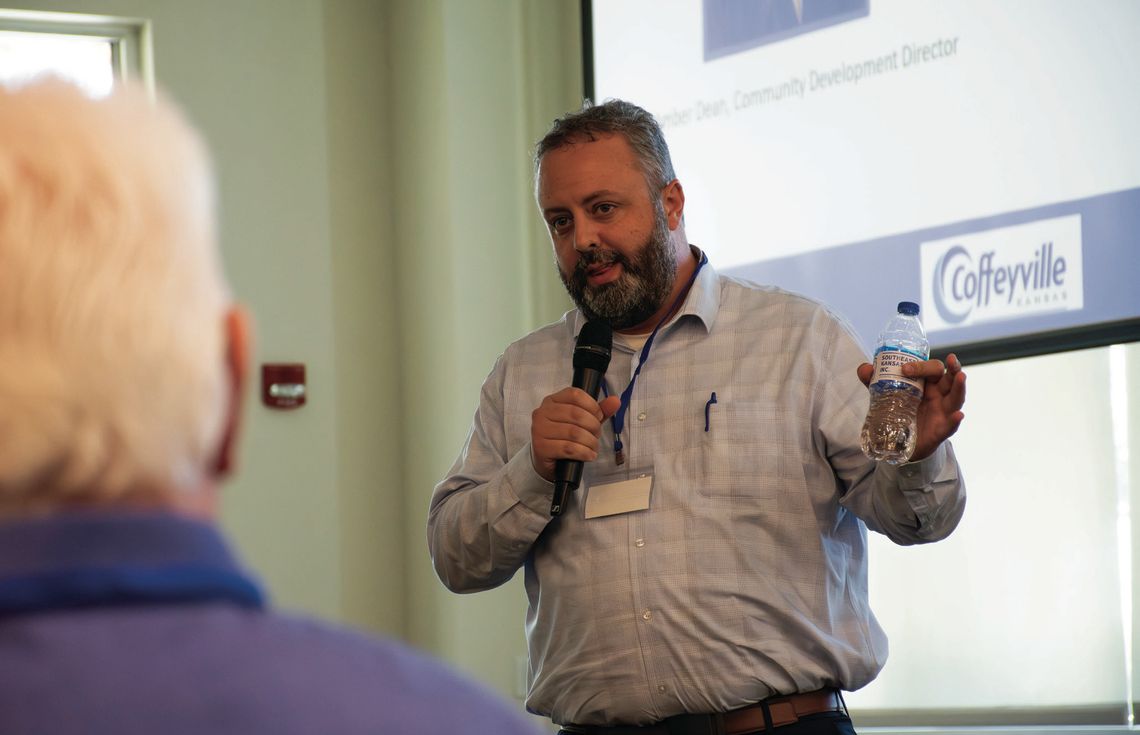
During the Southeast Kansas Inc. Housing Conference, Parsons Economic Director Jim Zaleski and Coffeyville City Manager Ben Brubaker noted their communities have both recently platted land for potential future development.
In Coffeyville, this land is located off of West 1st Street, with the City of Coffeyville purchasing 100 acres. Brubaker estimated that the infrastructure costs for the plat would be $20 million.
“I don’t know how we’re going to do that, but we’ve got to keep planning and hope these programs keep coming or the innovation is there,” Brubaker said. “I think you do have to be prepared; you can’t just wait to be acted upon.”
Brubaker said the City of Coffeyville is seeking grant funding to aid in that infrastructure-building process.
In Parsons, Zaleski said only the preliminary plat has been completed for a potential 107-house subdivision near Queens Road.
“We are looking at ways to eat that elephant one bite at a time,” Zaleski said. “Knowing that new infrastructure would run as high as $8 million.”
He said it was important to have this type of project “on the shelf.”
“If a new plant were to decide to come here or something like that, we’d be ahead of the game putting that into production,” Zaleski said.
When asked how long such a project would take to complete, Zaleski said that it would take roughly 18 months to put in the infrastructure needed, and then another year of construction on homes. However, in reality, this will be done in sections over several years.
The extensive cost for new land development makes building on infill lots attractive, Zaleski said.
“The infrastructure is already in place. Your water, sewer, gas, electric — it’s all right there already, because there used to be a house there,” Zaleski said.
According to Zaleski, housing is a three-legged stool. “You have to have demolition, which we are starting to see some of that. You have to have infill, and then you have to have higher-end housing,” Zaleski said. “Those three all have to happen to balance out our property tax challenges.”
Zaleski said that despite what some may claim, tearing down a dilapidated house does not increase the property tax that the rest of the population pays.
“If we go in and demolish a house, that goes onto their — the owner’s — property tax rolls. Most likely, their property taxes weren’t being paid anyway.”
In other stories, this reporter has mentioned communities with land banks typically obtain lots through similar situations. The benefit of tearing down blighted structures is making the property more attractive to potential developers, Zaleski said.
Recruiting new businesses and building houses are primary focuses of many of the region’s economic development agencies.
“Those are the three legs we are focusing on. We are using budgeted economic development money that has been set aside for demolition. We have an active land bank,” Zaleski noted.
In other housing news, he highlighted that Parsons was awarded a moderate income housing grant to complete three properties on 13th Street.
See PLANS, Page 5.
In other housing projects, it has been announced that a high-end housing subdivision is planned as an addition on Kay Lane. This development has 40 acres allocated, with plans to begin with eight lots to be built on eight of those acres. The homes are expected to cost $400,000–$700,000.
According to Zaleski, including higher-end builds in the general housing plan opens opportunities for homes in the mid to lower price ranges to become available.
“Projects like that not only attract people from outside of the town, but they open up housing for people moving from within the town to new housing. That is always a benefit,” Zaleski said.
In other housing problems, Zaleski said one concern is managing expectations.
“When a couple wants to buy their first home, they tend to want to buy the home they were raised in. The problem is that was their parents’ third home, not their first, “ Zaleski said. “So reality and expectation management is as big a part of what we’re trying to produce in housing as anything else.”
More stories of housing innovation will be shared in future parts of the Finding Home on the Range series. The Sun has received questions from readers about aspects of building and housing availability, which we aim to address in future parts of this series. If one would like to submit a question, email [email protected].