Plowpans are a solid soil sheet of tightly layered clay only 6 to 8 inches below the soil surface that restricts water, root, and air exchange.
Plowpans decrease crop yield, increase erosion, and make farm work more difficult. Plowpans can trap water like a shallow pond in the field which can mud up farm equipment or even kill crops during long rainy periods.
However you cut it, plowpans aren’t good, and it’s no secret how they are formed, by plowing. The best way to inspect plowpans is for farmers to dig some holes to see if and how deep the plowpan is. Wait for a few days after a rain so the soil is easy to dig. The plowpan soil will be markedly different in conventional tilled fields and characterized by a couple inch layer of hard “platy” clay. The roots of a mature crop will be flat and stubby along the layer and unable to break down into it.
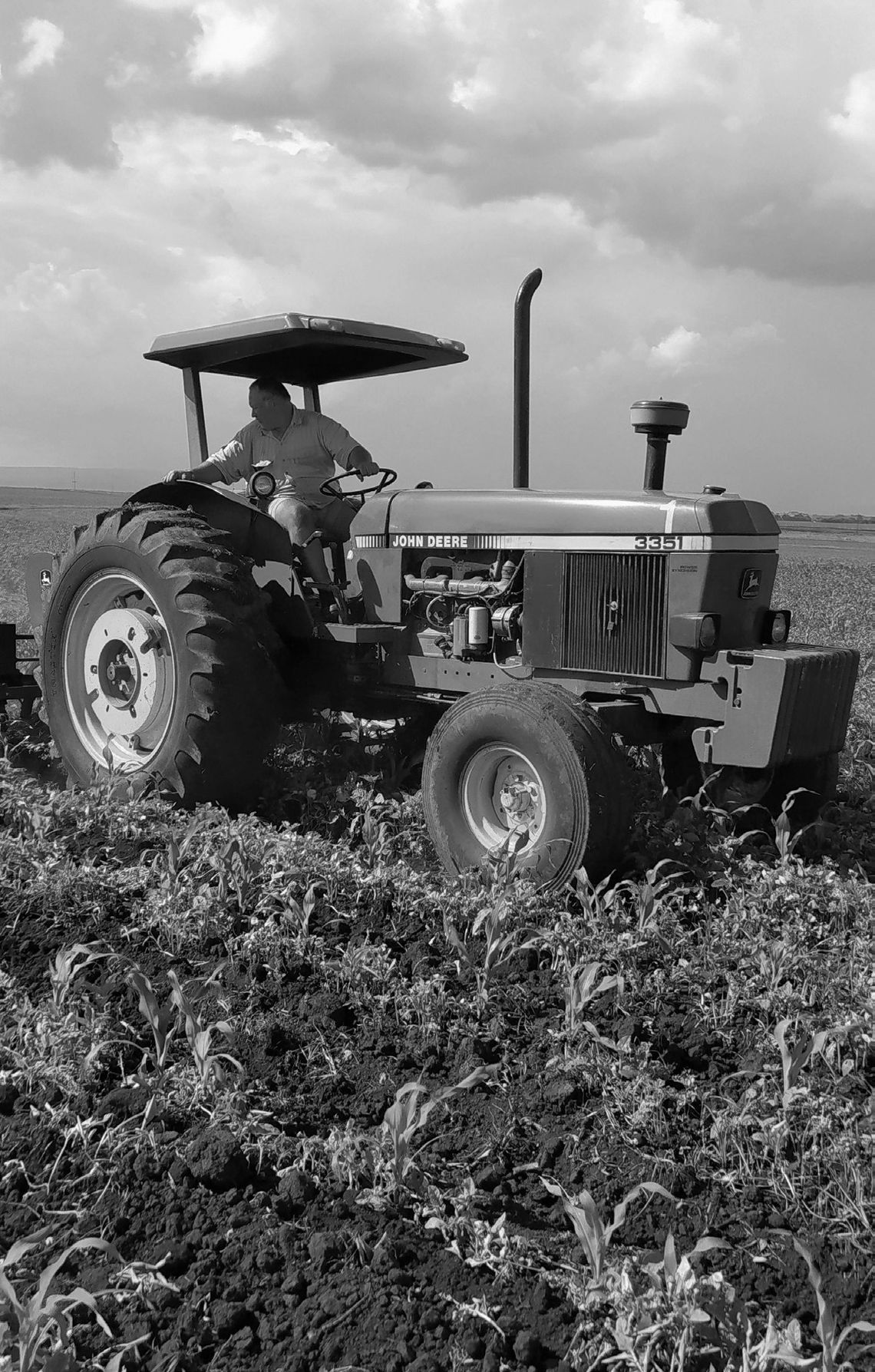
Plowpans form over a long period of time and it takes a long time to break them down. The first step is often, ironically, by tilling. Deep tillage is a very different operation than surface tillage.
A deep ripper plow is much heavier with heavy shanks and spades that are spaced a couple feet apart. A ripper is pulled though a field with the spade cutting through just below the plowpan. If the plowpan is six to eight inches deep, then the spade is running at eight inches deep.
The goal is to shatter the plowpan’s structure so that small cracks spread throughout the once monolithic soil plate. The surface soil might crumble around the shank but there should be little soil disturbance.
The soil moisture has to be just right for ripping to work. If the soil is too wet, then the ripper will slide through the soil rather than shatter it. Too dry, and it will be nearly impossible to get the ripper to cut deep enough.
To test the soil moisture, the plowpan soil should be dry enough to be crumbly and difficult to form into ribbons. Also remember that plowpan areas stay wetter longer because they pond water. If the ripper is pulling up big clods, it’s still too wet. In this part of the state please be wary of natural gas lines that crisscross so many of our fields.
There are a number of different rippers and subsoilers designs. Some are heavy hunks of metal shanks with a hard spade welded to the end. Some are more flexible with a shank that can bounce upwards if they come across a big rock. Nearly all of which will have spades that need to be replaced at times because ripping is a hard, power-intensive process.
It is recommended to have 20 to 30 hp for each shank. Rippers are designed to run at a slow speed of 2 to 3 mph. Some fields will be difficult to rip because by soil type, or by years of erosion, the pressed clay plowpan is mixed with lots of large rocks of a shallow bedrock.
After ripping a field, the real work begins. If a field is ripped and then continues to be frequently tilled when the soil is too wet, the plowpan will reform after a couple of years and likely even tighter than before.
Reducing tillage and tire traffic will prolong the effects of ripping. The real goal of ripping is to create fractures in the plowpan for water to soak through and for roots to follow and push apart.
Cover crops can help provide the continuous pressure of roots pushing the cracks apart. Reducing plowpan in a field often involves ripping, years of root pressure and reduced tillage, and perhaps even another ripping operation to break-out plowpan areas that have reformed. Ripping a field is not an every-year operation. It won’t compensate for more surface tillage and it won’t help in fields without a distinct plowpan that is inhibiting roots and water. Yield benefits of ripping can be seen in some years and non-existent in others, all depending on weather. Ripping can be expensive and slow and however it likely will not be needed across the whole field. It’s not a silver bullet but can be a valuable first step to plowpans. For more information about ripping, contact James Coover at [email protected] or (620) 724-8233.